
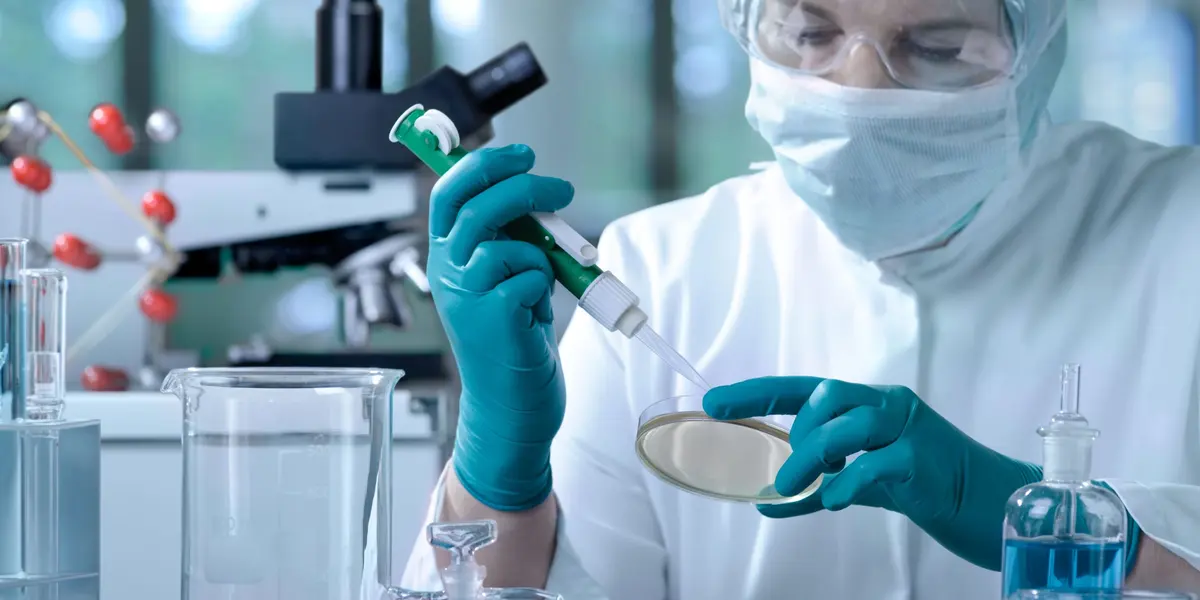
When you have a skin biopsy, the most important part happens after you leave: someone has to look at the tissue under a microscope and decide what it is. At our dermatopathology lab in Springville, UT, that work happens in-house.
Dermatopathology is the medical specialty of diagnosing skin disease from tissue samples. Our practice founder, Dr. Michael Peterson, is board-certified in both dermatology and dermatopathology, and completed his dermatopathology fellowship at UT Southwestern.
When a Biopsy Is Needed
Your provider may recommend a biopsy for a mole or spot that could be skin cancer, a growth that has changed, a rash that isn’t responding to treatment, hair loss with scalp changes, or any skin problem where the diagnosis isn’t clear from looking alone.
An accurate diagnosis decides everything that comes next — whether a spot needs no treatment, a simple removal, a wider excision or a different approach. Many skin conditions look alike on the surface and only show their true nature under the microscope.
Some biopsies answer a simple question — is this harmless? — while others guide a bigger decision, like how wide a skin cancer excision needs to be or whether a rash is psoriasis or something else. In both cases, having the slide read by a specialist who focuses on skin gives your provider the clearest possible answer. Every result is reviewed with you before any next step is decided.
How Our In-House Lab Works
A biopsy takes a few minutes in the office under local numbing. The sample is processed into thin slides in our lab and examined by a dermatopathologist, using both a microscope and digital imaging.
Because the lab is part of the practice, the person reading your slide can talk directly with the provider who examined your skin. That connection between what was seen in the exam room and what is seen under the microscope helps lead to a clear, accurate diagnosis.
When the result is ready, our team contacts you to explain it and schedule any next steps, such as removal, SRT or follow-up checks.
Results are explained in plain language. If a spot is harmless, you will hear that and nothing more needs to be done. If it is precancerous or cancerous, your provider will walk you through treatment choices — such as excision or Image-Guided SRT — and what to expect. For rashes and hair loss, the biopsy helps choose a treatment that targets the right condition instead of guessing.
Biopsy and Lab Cost in Springville
Biopsies and their lab reading are medical services and are usually billed to health insurance. Your cost depends on your plan and the number of samples. Our front desk can help you check your coverage before the procedure.
Why Choose Us
Our practice has a board-certified dermatopathologist inside it, not at an outside lab. Dr. Peterson also spent 12 years as an Army dermatologist and teaches as an associate professor in the Aspen Dermatology Residency program. Our four Utah offices offer same-day appointments, and Daily Herald readers voted us first in the Best of Utah Valley from 2019 through 2023.
Our in-house lab supports every service on our Springville dermatology homepage.